|
|
|
Recently in Books Category
Wednesday July 21, 2010 ~ 1 Comments
I know the readers of this blog like books, so I thought I'd point to four recently published ones that are being promoted through Leadership Network or Exponential. They are worth your attention. All four books debuted April 2010 at the Exponential Conference in Orlando, FL. Below are excerpts of interviews with each of the authors.
Exponential: How You and Your Friends Can Start a Missional Church Movement
by Dave Ferguson and Jon Ferguson
Exponential tells our story of how God brought a handful of friends together to start a missional church movement and how others could do the same. The principles we share come from the very message that Jesus communicated to His first followers when he said, "Come follow me." So, there may be very little that is actually new about this book, but it is the one book you can read if you want to reproduce yourself, your ministry and your church.
It doesn't matter if you're leading a small group or the lead pastor of a very large church, you need to be asking the question, "Who is walking beside you? Who are you equipping to do what you are doing?" That is absolutely foundational to developing a reproducing culture in any church. We are really excited...
AND: The Gathered and Scattered Church
by Hugh Halter and Matt Smay
We wrote the AND at the request of a respected group of network leaders who felt that someone needed to call the church past the "missional/attractional" divide that has grown over the last 5-7 years. The message was confirmed at an informal gathering of mega and micro church leaders in Denver, where we saw the exact same passion for the explosion and expansion of God's missional church across a wide range of forms. No one cared about "how" we were doing church. Everyone just wanted God's church to re-emerge from the ashes of irrelevance.
Early on, people assumed we were organic purists because our church started from scratch with most of our stories in homes, pubs, coffee shops, etc. As our story grew we felt uncomfortable being labeled by someone else's "form" of church. We never tried to claim any type of church, but we were learning that there is a natural struggle to find a balance of scattering people into incarnational mission but that there is also a significant beauty and meaning in corporate gatherings...
Viral Churches: Helping Church Planters Become Movement Makers
by Ed Stetzer and Warren Bird
It was our desire to write a book that would assist those involved or interested in church planting so that they might move beyond simply starting one church, toward the planting of movements. As such this book is intended for everyone involved in the church planting process: denominations, networks, local churches and church planters. Our ultimate hope is that we'll move from addition to multiplication. We need to see true church multiplication movements take place.
One of the first things we need to do is give more people permission to plant churches. There are marks of the biblical church and those always need to be central to what we do, but we have "clergified" church planting. In other words, we have made it necessary to be a certain class of person in order to plant a church...
Ethnic Blends: Mixing Diversity into Your Local Church
by Mark DeYmaz, with Harry Li
Ethnic Blends is for the growing numbers of pastors, church planters, and ministry leaders, indeed, entire staff teams who are seeking to promote greater ethnic/economic diversity within the local church or ministry they lead.
Intentionality is both an attitude and an action when it comes to mixing diversity into your otherwise healthy, homogeneous context. Yes, intentionality must permeate and inform every corridor of a multi-ethnic church. For instance, I have no doubt that people mean well when they say that they would gladly welcome others of varying ethnic or economic backgrounds to come be a part of "their" church. However, in practice, what they really mean is "... as long as 'they' like things the way we do them." Therefore, you should recognize that a healthy multi-ethnic church is not established by assimilation but rather...
If you haven't read these yet, be sure to check them out.
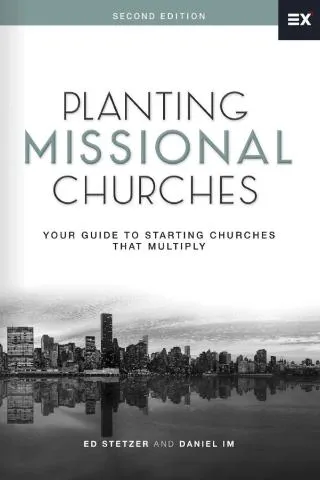
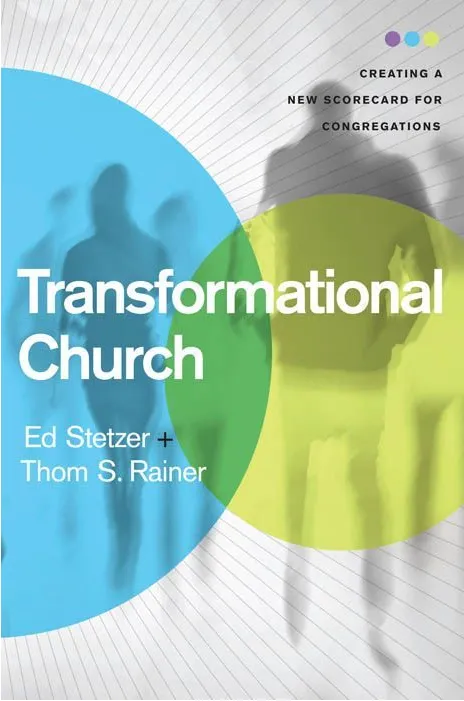
Speaking of books, if you're on Twitter, we've launched four new Twitter accounts -- @TransformChurch, @viralchurches, @SprtlWrfrMssns, and @plntgmsnlchrchs. With these accounts, we're hoping to get out the messages from Transformational Church, Viral Churches, Spiritual Warfare and Missions, and Planting Missional Churches. Link up with Twitter and start following!
Posted on July 21, 2010 at 1:38 PM ~ 1 Comments
Share This Post
Friday July 16, 2010 ~ 5 Comments

Charles Stone has written a new book, 5 Ministry Killers and How to Defeat Them, in which he looks at research on what pastors are saying about ministry, identifies five potentially devastating problems, and give wise counsel on how to overcome these "killers."
I am glad Charles was able to take the time to answer some questions here and come around the blog today to interact.
Here is our interview:
The book's title sounds rather ominous. What prompted you to write such a book?
The word killers does sound extreme, but sometimes we need a ministry wake-up call to avert future disaster. Killers hopefully will catch many pastors' eyes and interest them to look further. I wrote the book not primarily as a book for pastors in crisis, although the content applies there as well. Rather, I consider it a pre-crisis book, one that can help us avoid those issues that can kill a ministry, a marriage, or passion for God. I contracted both LifeWay research and Barna research to survey nearly 2,000 pastors. The findings were quite dramatic.
Posted on July 16, 2010 at 8:31 AM ~ 5 Comments
Share This Post
Monday July 12, 2010 ~ 3 Comments
Sociologist Bradley Wright has a new book out titled Christians are Hate-Filled Hypocrites . . . and Other Lies You've Been Told: A Sociologist Shatters Myths from the Secular and Christian Media. It has been reviewed extensively in recent days by bloggers including Scot McKnight, John Ortberg, and Andy Rowell.
John Ortberg describes the premise of the book well:
Wright is a sociologist from an Ivy League school who brings a peer-review, academic rigor to data-analysis. He notes that we in the evangelical community are notoriously bad about swallowing and repeating alarmist statistics about our society and our movement. He suggests that this is because alarmist statistics create a felt need for churches/books/programs/talks; whereas data that may be accurate but non-alarming does not create a burning platform.
He also notes that we are suckers for statistics; and that distorted statistics from bad methodology get quoted as if they were gospel. Many statistics get virtually plucked from thin air. The odds are fifty-fifty that the next statistic you hear will be true. And there's only a ten percent chance of that.
The cost of blindly repeating erroneous alarmist information is that we disregard truth, we train people to respond to a culture of alarmism, we create a negative self-fulfilling prophecy, and we develop sloppy intellectual habits that undermine the credibility of our message.
I was privileged to write the foreword for the book, which I am providing for you here:
Posted on July 12, 2010 at 10:13 AM ~ 3 Comments
Share This Post
Wednesday July 7, 2010 ~ 3 Comments
The folks at Leadership Network recently published an interview on their blog with Warren Bird and myself about our new book, Viral Churches. I thought it would be good to publish it here as well.
Why did you write Viral Churches?
Ed: It was our desire to write a book that would assist those involved or interested in church planting so that they might move beyond simply starting one church, toward the planting of movements. As such this book is intended for everyone involved in the church planting process: denominations, networks, local churches and church planters. Our ultimate hope is that we'll move from addition to multiplication. We need to see true church multiplication movements take place.
Warren: Lots of great books show people how to plant a church. We wanted to show the how - and why - of planting a whole movement of churches. Church multiplication asks questions like "how many apples are in this one seed?"
Where do your ideas come from?
Warren: Leadership Network commissioned Ed to oversee what we think is the nation's largest cross-denominational study of church planting. The study, along with his own work, pinpointed lots of exciting developments that need to be championed.
Ed: Over a six month period, with twenty-four interviewers, we surveyed hundreds and hundreds of people from denominations, networks and churches to ask questions about what is working in church planting. Also I have been involved in church planting in leadership roles for networks and denominations.
What's new in Viral Churches?
Ed: We tried to create a standard for measuring a church multiplication movement. We define it as when a movement of churches has a 50% reproduction rate each year with 50% of the people coming to the new churches as new converts and then seeing that pattern through the third year. In other words, if one year there were 100 churches, the next year there'd be 150 churches and half of the new people in those churches would be new converts and that goes on for at least three years. We consider that to be a church multiplication movement.
Warren: Viral Churches tells a lot of great stories about how people are birthing networks that plant churches through a multiplication approach. It gives a bunch of specific examples of how church leaders shift from addition-thinking to multiplication-thinking. It offers a new lens for looking at the Book of Acts, calling the Apostle Paul's travels his church planting journeys rather than his missionary journeys.
Were there any surprises in the research?
Warren: Each chapter begins with a specific research discovery, some of them rather surprising. For example, Ed's research totally debunks the widely repeated myth that 80% of new churches fail. It also demonstrates that people who are assessed (before planting) and coached (after planting) have a noticeably higher success rate.
Ed: Probably the big surprise is we just don't see a multiplication movement happening in North America yet. We see some hopeful signs and we see growth in the prominence of church planting but there's potential and need for much more than what's happening today.
What changes need to take place before a movement can happen?
Ed: One of the first things we need to do is give more people permission to plant churches. There are marks of the biblical church and those always need to be central to what we do, but we have "clergified" church planting. In other words, we have made it necessary to be a certain class of person in order to plant a church -- and I don't think we see that in the New Testament. We see laypeople planting churches, we see pastors going out and planting churches and we see bivocational people doing it.
It's amazing to me how many church planters think God's will is determined by whether or not they can get enough funding to underwrite them in a full-time ministry -- this attitude is unhelpful. We must learn to give people permission to plant biblically-driven churches without a false class system.
What's one thing readers will take away from Viral Churches?
Ed: The immediate takeaway from the book is that leaders shouldn't come in looking to plant a tree but to plant an orchard. If you start with that passion and focus then you will go out there and start churches that plant churches. The way you make your first convert may just determine the shape and the focus of your movement. So beginning with the end in mind is critical.
What do you hope your book will accomplish?
Ed: I'd like to pass on to readers that God is at work through His church. Ephesians 3:10 teaches that God has chosen the church to make known His manifold wisdom in the world. The church is not the center of God's plan, Jesus is, but it is central to God's plan. And if you love church, you'll love church planting.
Warren: Through working on this book, I met some very amazing people who readers need to know about. Their models and size of vision set the bar of church planting at a whole new level that places a far higher value on replication. We hope to persuade people that even the recent resurgence of church planting falls terribly short of what is needed to make the life-changing good news about Jesus Christ accessible to every North American today.
How can readers connect with you to continue this conversation?
People can interact with Ed at his blog Ed Stetzer.com, which also links to his Facebook and Twitter. It also highlights many places he's speaking, often with links to videos of his talks. Warren blogs regularly at learnings.leadnet.org.
You can order Viral Churches right here.
Posted on July 7, 2010 at 9:22 AM ~ 3 Comments
Share This Post
Friday July 2, 2010 ~ 1 Comments
I'm a preacher who loves preaching. Even so, I know preaching doesn't accomplish the church's entire mission. In fact, preaching consumes less than an hour a week for the average preacher or listener.
In the Transformational Church (TC) research, the issue of community kept surfacing. "Community" means the small gathering of people for Bible study, ministry and accountability. Called everything from small groups to Sunday school, the purpose is the same: to provide an environment where gospel transformation can take place in the lives of individuals and the church.
Our study revealed that community is highly valued in Transformational Churches. Sixty-four percent of TC members agree (strongly or moderately, here and throughout) with the statement "New members are immediately taught about the importance of living in community with other Christians." In these churches, community is a way of life.
Here are three observations from the research:
1) Valuing community empowers people to do ministry. Sadly, empowering only vocational pastors to do ministry is a common problem in our churches. But in a TC, everyone is empowered to do ministry. Seventy-two percent of TC members agree with the statement "When people are plugged into a small group at our church, they are ministered to and well cared for."
2) Strong small community structure leads to a new reality of service. The "80/20 Rule" comes up - a lot - as I speak to pastors of varying backgrounds. For all the resources consulted and prayers offered, we still struggle to mobilize people. On the other hand, TCs do not. We found that 71 percent agree "Serving is considered normal behavior at our church." It's not 100 percent, but it's worth celebrating.
If serving were "considered normal behavior" at your church, how would it change both the members and the city? The recent flooding in Nashville, Tenn., displaced thousands, but churches mobilized to help. For several weeks, service was "considered normal behavior." In a TC, that mentality lasts.
3) Multiplying groups is a blessing, not a curse. There is a rule among small-group pastors and education ministers: Never say "split." "Start," "multiply" and "reproduce" are acceptable, but never, ever "split."
Small groups in TCs work to gather and to scatter. Gathering leads people into a relationship with Christ and teaches them to participate in His mission. Thus, the scattering. Starting new small groups gives room for new people and opportunities for new leaders.
In our survey, 69 percent say their church regularly starts new small groups. People will want to forge new groups once they understand the need to engage in God's mission of transformation.
God designed us to live in relationship with Him and one another. As church leaders engage believers in small-group communities, transformation occurs. Much goes into being a Transformational Church, but community is vital. It is critical to lead people from the rows of a preaching event to the circles of a small group.
This column appears in the Summer 2010 issue of Facts & Trends, a publication of LifeWay Christian Resources. Some other articles about Transformational Church in this issue are:
Facts & Trends is published four times a year. For a free print subscription, send your name and mailing address to facts&trends@lifeway.com.
Posted on July 2, 2010 at 8:22 PM ~ 1 Comments
Share This Post
Wednesday April 21, 2010 ~ 19 Comments
Jared C Wilson the pastor of Middletown Church in Middletown Springs, Vermont, and is the author of Your Jesus is Too Safe: Outgrowing a Drive-Thru, Feel-Good Savior. His newest work, Abide, is a group study that offers a gospel-centered approach to living in the world as citizens of the Kingdom of God.
From the website,
Posted on April 21, 2010 at 6:45 AM ~ 19 Comments
Share This Post
Friday March 19, 2010 ~ 2 Comments
Warren Bird and I were interviewed at Leadership Network about our new book, Viral Churches. Here's an excerpt of the interview where I explain a little of the background to the book.
Over a six month period, with twenty-four interviewers, we surveyed hundreds and hundreds of people from denominations, networks and churches to ask questions about what is working in church planting.
...
We tried to create a standard for measuring a church multiplication movement. We define it as when a movement of churches has a 50% reproduction rate each year with 50% of the people coming to the new churches as new converts and then seeing that pattern through the third year. In other words, if one year there were 100 churches, the next year there'd be 150 churches and half of the new people in those churches would be new converts and that goes on for at least three years. We consider that to be a church multiplication movement.
Head over to Leadership Network and read the whole interview. You can order the book, Viral Churches, here.
Posted on March 19, 2010 at 9:43 AM ~ 2 Comments
Share This Post
Monday March 8, 2010 ~ 4 Comments
Trevin Wax, has written a helpful book that's generating a lot of good discussion. I'm happy to have Trevin on the blog today, answering a few questions about his book, Holy Subversion. It's a great book that challenges us all to live a distinctly Christian life, one that is truly subversive. After you read the interview, stick around to talk with Trevin. He'll be hanging around the blog today to interact with us all.
What does it mean to live "subversively" for Christ?
Posted on March 8, 2010 at 9:27 AM ~ 4 Comments
Share This Post
Wednesday February 17, 2010 ~ 1 Comments
Leadership, a division of Christianity Today, created the Golden Canon Awards-- the ten books of 2009 most valuable for church leaders. If you're looking to learn and enjoy reading, you'll appreciate this compilation. We were honored to see that Lost and Found: The Younger Unchurched and the Churches that Reach Them made the list as well. LifeWay just released more information on their news site.
Jason Hayes, Richie Stanley, and I wrote Lost and Found to help churches and ministry leaders.
First, we offer a detailed look at the four younger unchurched types. Next, we use our results from research to break some long established assumptions about how to effectively engage the lost. Then, we establish the importance that churched and unchurched young adults place on community, depth of content, social responsibility, and making cross-generational connections. Finally, we also tell the story of churches that are successfully reaching and keeping this generation.
In all of it, we're not just letting people know of the problem-- we're really striving to provide help. As we say in the introduction, it is not entitled Lost and We Just Wanted to Tell You. We called it Lost and Found because we want you to know that lost young adults are being found-- effectively engaged in our culture, coming to faith in Christ, and being incorporated into congregational life.
Order a hardback or get the unabridged audiobook if you're interested.
You can also listen to the audio from my recent talk at an Acts 29 quarterly meeting in Saint Louis where I give a brief overview of the data in the book.
Posted on February 17, 2010 at 8:26 PM ~ 1 Comments
Share This Post
Wednesday February 10, 2010 ~ 8 Comments
Vince Antonucci is the founder and lead pastor of Verve, an innovative new church for the unchurched on the Las Vegas strip. Vince's passion is creatively communicating biblical truth to help people find God. He is also the author ofI Became a Christian and All I Got Was This Lousy T-shirt.
Vince is also part of The Verve Foundation, which does community service to meet needs on and around the Vegas Strip.
His new book, Guerrilla Lovers, is another encouragement to the church to love in "deed and truth." I was happy to have the chance to ask Vince a few questions about the book. He'll be on the blog today answering your questions in the comments.
Posted on February 10, 2010 at 7:30 AM ~ 8 Comments
Share This Post
Sunday January 24, 2010 ~ 28 Comments
In September Brent Thomas, pastor of Church of the Cross in Peoria, AZ, took issue with a 9 Marks review of Jim Belcher's Book, Deep Church. Brent saw the review by Greg Gilbert as not only "snarky," but also unfair. In fact Gilbert's review actually received a response from Belcher himself on Trevin Wax's blog. There Belcher explained how Gilbert had somehow missed the point of his book. In his blog post Brent wondered if there was something of a growing rift within Reformed Evangelicalism related to the issue of the "missional church."
Just last week Brent's suspicions seem to have been confirmed through another 9 Marks publication by Jonathan Leeman. Leeman's article, "Is the God of the Missional Gospel Too Small" is troubling in that he argues missional thinkers place a heavy emphasis on social justice that moves the church away from a proper emphasis on the gospel. Brent explained,
Posted on January 24, 2010 at 5:15 PM ~ 28 Comments
Share This Post
Tuesday January 19, 2010 ~ 16 Comments
If you're online and read blogs then you probably know Adrian Warnock. Adrian is a Christian writer, preacher and part of the Jubilee Church, London, UK leadership team for more than ten years. His new book, Raised with Christ: How the Resurrection Changes Everything, addresses the great hope of the Christian faith; that Jesus died-- and rose from the dead! Do we need another book written on the resurrection? Well, let's be honest. How many books have you read on this most central doctrine of our faith? Not only is this a book that needed to be written, it is a book you need to read. Check out the interview with Adrian below, and be sure to jump in engage him in the comments as he'll be hanging with us to talk through the issues.
Why did you decide to write about the resurrection?
Posted on January 19, 2010 at 9:00 PM ~ 16 Comments
Share This Post
Thursday December 10, 2009 ~ 23 Comments
J. D. Payne is a National Missionary with the North American Mission Board and an Associate Professor of Evangelism and Church Planting in the Billy Graham School of Missions, Evangelism and Church Growth at Southern Seminary in Louisville, Kentucky, where he directs the Church Planting Center (and, in this pic, he looks quite professorial).
He has served as a pastor of three churches in Kentucky and Indiana and has worked with five church planting teams. Over the years he has also served as a coach and mentor to numerous church planters. He is the author of three books: Missional House Churches: Reaching Our Communities with the Gospel, The Barnabas Factors: Eight Essential Practices of Church Planting Team Members , and his newest, Discovering Church Planting: An Introduction to the Whats, Whys, and Hows of Global Church Planting.
J.D. and I have been friends for a long time (he was once my grader when I taught at Southern) and later was my successor in that role. I know him well enough to tell you that his first name is "Jervis," which is pretty weird if you ask me. ;-)
His new book is very helpful and I now use it as one of my required textbooks when I teach church planting. So, I asked J.D. to talk about his new book and the state of church planting here on the front end of the 21st century. Read the interview, buy the book, and be sure to jump into the comments where J.D. will respond to your questions and comments.
With all of the books out there on church planting, what is the purpose of this one?
The purpose of this book is to provide a single, practical, work that addresses the biblical/theological foundations, several critical missiological principles, a few historical perspectives, and many contemporary issues related to church planting in the 21st century.
I have been involved in church planting in the U. S. for the past decade, including almost twelve years of teaching in the classroom. While there are many excellent books on church planting which I use, and will continue to use in the classroom (especially Planting Missional Churches J ), I wanted a book that was a good introductory work written for both church planters and other church leaders. Since there are many church planting books available, I had the benefit of drawing from the wisdom and experience of others when writing. The subtitle summarizes the book: "An Introduction to the Whats, Whys, and Hows of Global Church Planting"
I'm assuming that there is something significant about the words Global Church Planting. Am I correct?
Absolutely! This book is not a model-specific book for one particular context. While I have included a chapter on models of church planting, the focus is on understanding the principles that can be translated to cultures and societies throughout the world and how to make appropriate application of those principles to the field. While acknowledging my pastoral and church planting experience has been exclusively connected to the U. S., I worked hard to write with a much wider audience in mind.
What is unique about this book?
In addition to being a church planting book not specifically about a methods or models, but rather on the application of principles and contextualization of methods, there are two other unique aspects. First, I begin by ironically writing that ultimately the book is not about church planting, but Kingdom expansion through disciple-making. While there are many ways to plant churches, biblical church planting is evangelism that results in new churches. Therefore, a heavy focus of this book is about Kingdom growth through the multiplication of disciples, leaders, and yes, churches. As the gospel transforms lives and churches are planted, those new Kingdom citizens must set out to expand the Kingdom by living according to a Kingdom Ethic, thus transforming their societies with the gospel.
Second, this book is a call to understand that the primary biblical expression of the church planter is that the church planter is a missionary, doing evangelism, gathering new believers together to be the local church, and raising up elders from within (e.g., Acts 13-14) the community. In the western Church, especially in the U. S. and Canada, we have lost the New Testament understanding of the apostolic functions of church planters. For example, the majority of the church planting books and conferences geared toward a North American audience expect the person who plants will also pastor that church. While I'm not opposed to such a model (my experience has been with such a model) and support it in certain contexts, the weight of the Scriptures is on the church planter functioning more after an apostolic pattern--as a missionary who raises up pastors.
Can you give me a quick overview of the content?
Certainly. The book is divided into four major sections. The first, and most important section, is "Discovering Biblical and Theological Foundations". In this section, I spend much time addressing ecclesiology, the Holy Spirit, Prayer, Spiritual Warfare, Evangelism, Discipleship, and Leadership development as related to church planting. Section two is "Discovering Missiological Principles," and includes chapters related to multiplication strategy development, receptivity, contextualization, role of partnering churches, and church planting teams. The third section, "Discovering Historical Paradigms," examines the church planting activities of the Moravians across the globe and the Methodists and Baptists on the American frontier. The final section looks at several contemporary issues that church planters are facing. Chapters are devoted to family matters, church planting models, overcoming objections to church planting, urban church planting, tentmaking, the apostolic understanding of church planters, and church planting movements.
This is a massive work. Is this book just for the scholar?
I know. It can choke a horse! I use my personal copy as a stepstool when I change light bulbs!
Seriously. No. It is not just a textbook for the scholar. Prior to his death, Ralph Winter graciously wrote an endorsement for the book that relates to this matter. He wrote, "Books about on church planting. Few go into such sweeping and helpful detail. This is not a book written by an ivory tower scholar but by a true scholar activist." While comprehensive, this book is practical by nature. As I note in the book, church planters must be both outstanding theologians and missionaries. To be one without the other is a liability to the Kingdom. While much of this book involves a heavy amount of the theology and missiology undergirding church planting practice, I keep pushing the reader toward practical application of the book's contents. I partially make this push by concluding each chapter with several application-related questions for individuals and groups.
Church planting has really come into the spotlight in the last several years. Are we getting better at it? If we are, what do you think has been the key to that success. If we aren't, why?
I think we are improving in some areas and in other areas we are missing the mark. We have made great progress in the area of training guys to be pastors of newly planted churches. And I believe we will (and must) continue to advance in this area. Many church planting conferences today are not so much about church planting, but about how to lead the church you just planted. I believe such training provides very important information. I know that having served as a pastor of established churches and as a pastor in new churches the ministry contexts are very different, with each having their own unique challenges. I am very excited about what I am seeing in the area of pastoral training. I also think we have made great progress in the area of networks. We are now seeing church planters networking together for accountability, encouragement, and resourcing in ways that were not taking place ten years ago. A third advancement is in the area of raising the banner for the family. Today, unlike a decade ago, church planters are being strongly encouraged to guard their families. The reason I believe we are making significant progress in these areas is because church planters are approaching their ministries as both learners and as leaders. They are eager to learn from one another (believing that they do not have all the answers), while at the same time desire to share what they have personally learned in their journeys (believing that the Lord has given them some truth to pass along to assist others).
While we have grown in many areas, in other significant areas, we have made little progress. Even with all the discussions about being missional since the late 1990s, we still do not think and act like missionaries in our church planting endeavors. First, in the United States and Canada, in particular, we have an ecclesiology problem. There is too much of our cultural Christianity affecting our understanding of the local church, and not enough of the Bible. The greatest problem in church planting today is an ecclesiology problem. How we answer the question, "What is the local church?" will affect everything we do in church planting. We are attempting to plant churches that reflect too much of our cultural preferences and pragmatic tendencies, rather than biblical churches that are contextualized to the people. Second, and closely related to this problem, is the fact that we still do not understand that the primary biblical model for the church planter is that of a missionary who will plant churches and raise up pastors for those churches. There is little room for the missionary at the church planting table in the United States and in Canada. Third, and closely related to these other two challenges is the fact that biblical church planting is evangelism that results in new churches. What I mean by this statement is that church planting, as described in the Scriptures, is about conversion growth and not transfer growth. With approximately 75% of the United States and Canada not having a relationship with Jesus (and another four billion people across the globe), we must stop praising and rewarding transfer growth church planting strategies/methods and begin to focus on highly reproducible, multiplication strategies that lead to the making of disciples from out of the harvest fields. I write extensively about these concerns in the book.
What are a few other books on church planting that you believe are important to understand?
There are several excellent books out there today. I'm sure I'm going to forget some of them here. . . . Your book is a very good book-- and I promise I did not write this because this is your blog. I use and recommend Planting Missional Churches to many people. My guess is that most of those reading this blog are familiar with your work. Tom Steffen's book Passing the Baton: Church Planting that Empowers is an excellent resource. Of course, if there ever was a "classic" in church planting literature, David Hesselgrave's book Planting Churches Cross-Culturally would be at the top of the list. Aubrey Malphurs' book Planting Growing Churches for the 21st Century and Bob Logan's Church Planter's Toolkit have influenced countless numbers of church planters over the years. While not a book, Bob Logan and Neil Cole wrote the outstanding resource Beyond Church Planting a few years ago. The most influential book on my thinking has been Charles Brock's book Indigenous Church Planting: A Practical Journey. Of course, I'm a little biased, but I also think my other book The Barnabas Factors: Eight Essential Practices of Church Planting Team Members is also important to read.
J.D. will be hanging around the blog today interacting in the comments, so be sure to hit him up with all your church planting questions.
Posted on December 10, 2009 at 10:42 AM ~ 23 Comments
Share This Post
Tuesday November 10, 2009 ~ 6 Comments
Remember that Bon Jovi song from the late 80s, "Living in Sin?"
Well, I'm guessing half of you do.
It's about "love" justifying living together as a married couple, without a marriage covenant.
The song shouts, "I call it love, they call it living in sin!"
Remember? Rock ballad, black and white video?
Anyway, people are still talking about it and more people are living together today than they were back in the 1980s. At LifeWay Research, we wanted to know more.
In June of 2008 (and September 2007), we conducted related surveys (thankfully, not about Bon Jovi) for a recent book on parenting, The Parent Adventure: Preparing Your Children For a Lifetime With God, by Selma & Rodney Wilson and Scott McConnell.
In our study, we found that 6% of all parents with children under 18 years of age in their home are living with a partner to whom they are not married.
To give this some context, we first determined that 69% of all parents are married and 31% are single. We asked these single parents the following questions:
Posted on November 10, 2009 at 4:38 AM ~ 6 Comments
Share This Post
Thursday November 5, 2009 ~ 11 Comments
As I recently mentioned, I am intrigued by the Independent Baptist Movement. It is often caricatured and frequently misunderstood, but definitely worth understanding. With that in mind, when I see research on this movement, it catches my attention.
Paul Chappell and Clay Reed have written a book based upon an independent, nationwide survey of independent Baptist churches, and the result is Church Still Works, an insightful read that will prove surprising to some and encouraging to all.
Paul is the senior pastor of Lancaster Baptist Church and president of West Coast Baptist College in Lancaster, California. Clayton is the founder and director of Global Church Planters, which has worked with American missionaries and national pastors to help start more than three hundred churches around the world.
I was happy to talk to Clayton about the new book, and think you'll find the interview and the book helpful.
Posted on November 5, 2009 at 8:30 AM ~ 11 Comments
Share This Post
Thursday October 8, 2009 ~ 14 Comments
I have never been that guy who geeks out over Bible study software. I've always been old school. You know, I'd go with the hardcopy, printed editions of study helps and commentaries. These large, multi-volume works have taken up shelf space in my study/office for at least 20 years. And come on, who doesn't like shelves lined with books? It's a great aesthetic for a study.
Needless to say, heading out to study for my sermon at a coffee shop or a park was next to impossible. Well, unless I stuffed my bag so full of books that the zipper began to pray.
The Logos Scholar's Library: Gold has changed the way I study, where I study and the results of my studying. I am consistently impressed with it and thought I would share my review here at the blog.
Posted on October 8, 2009 at 5:58 PM ~ 14 Comments
Share This Post
Tuesday October 6, 2009 ~ 1 Comments
While speaking at the Together for Adoption Conference, I visited a bit with my friend with Tony Merida. The Meridas have recently adopted four children from the Ukraine and have a passion for orphan care. I always appreciate his passion for the gospel and the mission of God.
Seeing him, reminded me that Tony's new book is out and I wanted to share a bit about it through the foreword I wrote for the book. It is a short foreword, but for some reason I manage to quote a Journey song, the Fireproof movie, and Lord of the Rings.
Not sure what got into me that day... but the book is worth your time, even if my foreword might not be!
Posted on October 6, 2009 at 5:34 AM ~ 1 Comments
Share This Post
Monday October 5, 2009 ~ 20 Comments
Jim Belcher is the founding and lead pastor of Redeemer Presbyterian Church in Newport Beach, California. He is co-producer of the docudrama "From Earth to Heaven: The Life and Art of Vincent Van Gogh." He is also the cofounder of the Restoring Community Conference: Integrating Social Interaction, Sacred Space and Beauty in the 21st Century, an annual conference for city officials, planners, builders and architects.
Jim's new book, Deep Church is getting a lot of attention as he works to make sense of the conflict between the emerging and traditional ends of the church while offering a "third way." Read the interview and then jump into the comments below. Jim will be with us today and will interact with your questions.
Posted on October 5, 2009 at 8:00 AM ~ 20 Comments
Share This Post
Wednesday September 2, 2009 ~ 18 Comments
I have shared a bit of my journey to healthier living and weight loss here on the blog, so the story of Todd Starnes' transformation and his new book naturally grabs my attention. And I imagine many of my readers would benefit to hear from his as well. Todd Starnes is a best-selling author and network news reporter for Fox News Radio, based in New York City. He is also an evangelical Christian and a member of the Journey Church in Manhattan. Todd is an award-winning journalist, earning one of his profession's highest honors, the Edward R. Murrow Award and the Associated Press Mark Twain Award for Storytelling. His work is heard on more than 750 radio stations around the nation. He also hosts a religion podcast called, "FOX on Faith."
Posted on September 2, 2009 at 8:30 AM ~ 18 Comments
Share This Post
Friday August 14, 2009 ~ 15 Comments
Steve Addison is the Director of Church Resource Ministries (CRM) Australia, and the author of a new book, Movements That Change The World. Steve is called to encourage church planting movements around the world and is therefore a student of the history of movements that spread the gospel. His new book is a look at that history.
I asked Steve a few questions for the blog. It's short and packed with content - sort of like the Gospel of Mark, just without the divine inspiration. :) Steve is in Australia, so with the time difference he wont be able to check out your comments and questions until around 6pm. But he will make it to the blog to interact. So hit him up now and he'll respond later this evening.
Why did you write Movements that Change the World?
A number of reasons. As a church planter I remember hearing Peter Wagner say, "Starting new churches is the most effective form of evangelism under the sun." I thought if that's true, then starting church planting movements could be even more effective.
I dived in to some church history and discovered that God was continually raising up movements for the renewal and expansion of the Christian faith. I learned that those movements are always on the fringes.
I began looking at Jesus as the founder of a missionary/missional movement that now spans the globe. I read Acts and Paul that way, and the lights came on.
You've identified the characteristics of dynamic movements. Tell us about them.
The five characteristics are: white-hot faith, commitment to a cause, contagious relationships, rapid mobilization and adaptive methods.
White-hot faith is the engine room of a dynamic movement. The apostle Paul was not converted by clever arguments but through a powerful encounter with Christ on the Damascus Road. We would not have had the Reformation without Martin Luther's struggle with the question of, "How can a holy God forgive a sinner like me?"
The secret of Jesus' life and ministry was his relationship of loving obedience to the Father and dependence on the power of the Holy Spirit. He drew his disciples into the same relationship and sent them out with no other resources.
A white-hot faith provides the motivation, energy and legitimacy to go change the world.
Next is commitment to a cause. For good or for evil, history is made by people committed to a common purpose. Nothing changes unless people care deeply and are willing take action. Jesus had high expectations of his followers. So high, that some of them walked away.
John Wesley was the founder of the Methodist movement. On one occasion he visited Bristol. When he arrived there were 900 people in the local Society. When he left 143 of them had been removed for various reasons: among them wife-beating, smuggling, and drunkenness. Wesley led a disciplined movement that changed the world.
The third characteristic of movements is contagious relationships. We are all just six handshakes away from everyone on the planet. Ideas, like viruses, spread from person to person and from group to group. In the age of the internet, contagious relationships are still the most important form of communication.
The most responsive people to the gospel are those who have recently seen someone in their world come to faith.
Whenever we see the Christian faith expanding exponentially, it's traveling across networks of preexisting relationships. We tend to focus on building quality relationships with a few. Jesus focused on connecting broadly and then through one responsive person, reaching households and villages. That's how we see the gospel spreading in Acts.
The fourth characteristic is rapid mobilization. Movements don't abolish the clergy, they just ordain everyone for ministry. What did Jesus do? He went after ordinary people and trained them on-the-job. His lecture on the nature of faith was conducted on a sinking boat in the midst of a storm. There was theological content integrated with life and ministry. Jesus grew leaders and released them to go and change the world.
You don't get dramatic expansion of a movement if everyone is a paid professional. If anyone is paid, they are paid to pioneer new fields and mobilize others. Whether they are in New York or New Delhi, that's what missionaries do.
The last characteristic is adaptive methods. The best illustration of an adaptive method I can think of is the game of soccer. Soccer is the world's game played by hundreds of millions and watched by billions. Why? I think it's because you can drop a ball at the feet of a three year old and she can start playing. It may take a lifetime of practice to master the game, but only an instant to begin enjoying it. Try doing that with American or Australian football.
Adaptive methods are simple, flexible and transferable. That's one reason why Jesus taught by telling stories. A good story, like the prodigal son, can be told by anyone to anyone, even across the boundaries of culture and time.
Movements are unchanging when it comes to their core message and beliefs. At the same time they are willing to change everything else to get that message out and get the job done. Unfortunately we have churches that are unwilling to change their methods, but quite happy to change the heart of the gospel. They have the worst of both worlds and the fruit is clear to see.
Where are the current examples of dynamic movements today?
The exciting news is they are mostly in the developing world--Africa, Asia, Latin America. These are also the regions of greatest population growth. Today, over 90% of new Christians will come from these regions. Expect that trend to continue.
In the US I've been encouraged by leaders such as Neil Cole, Bob Roberts, Ralph Moore, Tim Keller, Mark Driscoll, and Jimmy Seibert who emphasize multiplication of disciples, workers and churches rather than just growth. A growing band of leaders are seeing the church as a movement.
The whole missional/emerging discussion has helped unfreeze us all in our understanding of church. If that is combined with a commitment to the Gospel and a passion to multiply disciples it could be quite fruitful.
What are some contemporary examples of adaptive methods?
I think the Alpha program is a good example. The strategies that David Garrison and others have developed to fuel church planting movements around the world is another clear example.
Who do you want to reach with the message of this book?
As I wrote I thought of a number of actual people. A couple leading a home group who have led eighteen people to Christ in the last year, and are wondering if this is the beginning of a new church. I thought of the leader of a large church in Kenya that is growing leaders who plant churches in the suburbs and the slums. I thought of a young woman in China who has come to faith, and is now reaching her friends with the gospel. I thought of a church leader in New York with a vision to reach the cities of the world.
What difference do you hope the book will make?
I want people to discover Jesus as the leader of a movement that changes the world.
Jump into the comments to ask Steve all your questions. He'll show up tonight for the discussion.
Posted on August 14, 2009 at 8:00 AM ~ 15 Comments
Share This Post
|
|
Install Flash

|
|